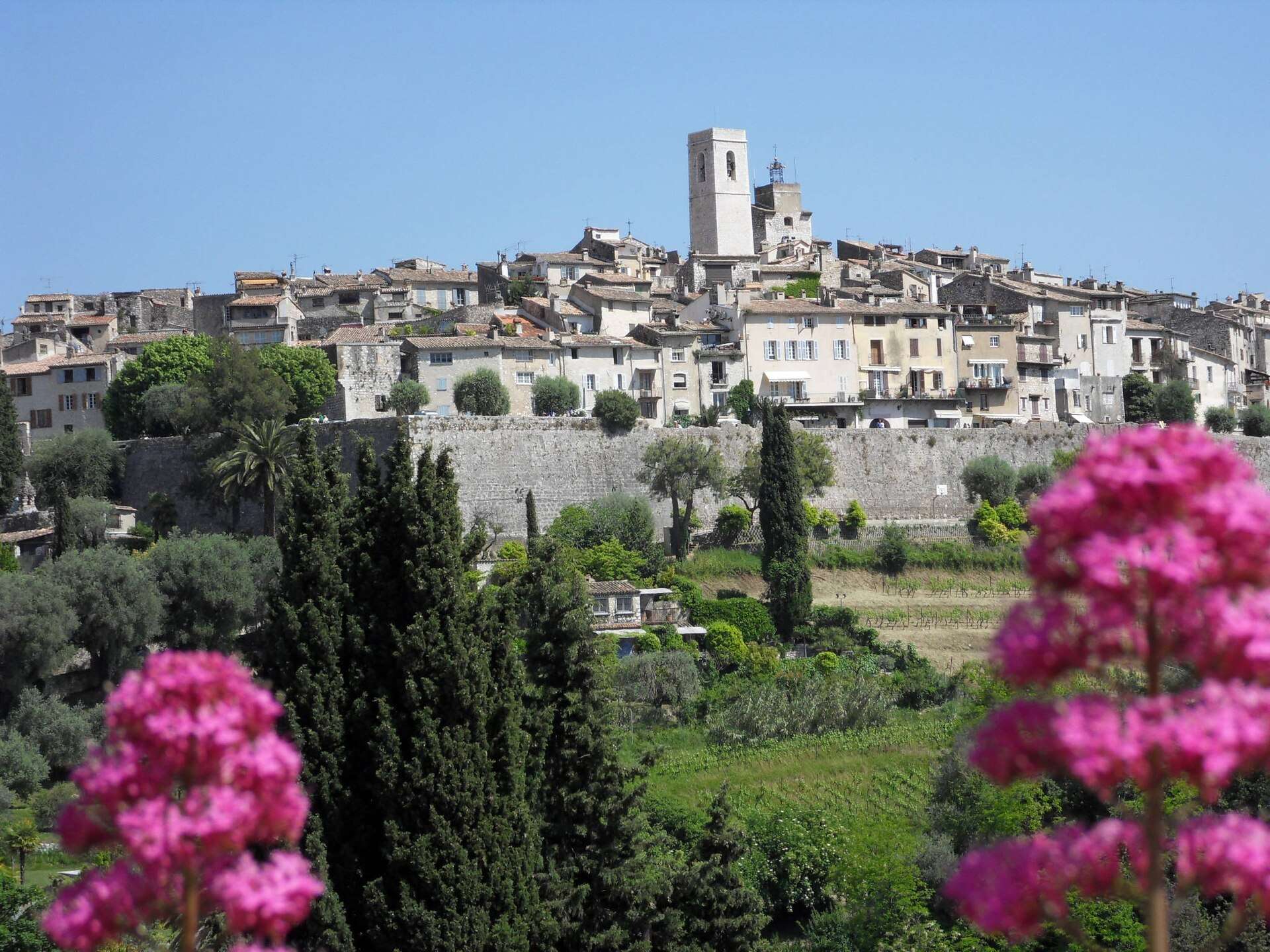
The Painters’ Village of Saint-Paul-de-Vence
An hour inland by pocket-change bus, the walled hill village runs one of Europe’s great private art foundations, lanes that are one long gallery of mixed seriousness, and a cemetery where Chagall chose to stay.
The short version
- Regional buses run Nice to Saint-Paul-de-Vence in about an hour at pocket-change fares — the stop lands below the walls with the Fondation Maeght a signed ten-minute walk up its own pine hill.
- The Fondation Maeght is the alarm’s headline: the Maeght family’s 1964 foundation ranks among Europe’s great private modern-art institutions — Miró’s sculpture labyrinth, the Giacometti courtyard’s walking figures, Chagall, Braque, and rotating headline exhibitions — around €16 and booked ahead in season at fondation-maeght.com.
- The village’s gallery economy runs exactly as the alarm graded it: dozens of storefronts from genuinely serious dealers to holiday-print retail, threaded through lanes whose stone would carry the visit even empty.
- La Colombe d’Or holds the Riviera’s best dining legend as documented fact: the inn’s owner accepted canvases from broke interwar painters — Picasso, Matisse, Léger among them — and the collection still hangs over the tables, glimpsed per the alarm through the famous door or secured by a booked (and priced) meal.
- Chagall lived his last two decades in Saint-Paul and lies in the cemetery at the village’s seaward tip — the simple tomb, often pebble-topped in the Jewish custom, closes the alarm’s route.
- The pétanque ground by the café terraces carries the Yves Montand lore lightly (the actor’s games here are village scripture), and the rampart walk rings the whole ensemble with Alps-to-sea sightlines for free.

Getting there
The bus per the alarm costs next to nothing and lands the sequencing decision in your favor: Maeght first — its hilltop entrance sits before the village proper — with the booked slot beating both the coach-tour surge and the midday heat. The village’s single main artery funnels everyone through the same gate; by late morning in season it runs shoulder-to-shoulder, which is the arithmetic behind the alarm’s do-it-first clause. Drivers face paid lots below the walls that fill early.
The day
The Maeght’s two hours reward slow circulation: Léger and Chagall inside, but the building’s real thesis outdoors — Miró’s labyrinth of ceramics and bronzes stepped down the pine terraces, the Giacometti courtyard’s thin walkers arranged as the architect intended, Braque’s pool mosaic, and the chapel’s Braque window. Then down to the walls: enter the gate, surrender to the single lane’s slow current, and grade the galleries per the alarm’s license — the serious rooms announce themselves, the print shops likewise, and the stone arches over both without judgment. The Colombe d’Or moment takes thirty seconds at the door or two hours at a booked table; the terrace cafés opposite the pétanque ground handle the affordable version of the same afternoon. Close at the cemetery: Chagall’s slab, the sea past the cypresses, and the rampart loop back for the Alps-to-Mediterranean panorama. The bus home runs into the evening.
When to go
March through June and September through November run the village at conversational density with the light painters actually moved here for. July–August is the full Riviera crush — the alarm’s book-and-go-early structure becomes survival advice, and late afternoons (after the coaches pull out) recover some of the lanes’ quiet. Winter empties it beautifully: the Maeght runs year-round, half the galleries hold hours, and the stone does its best work in low sun. The Maeght’s headline summer exhibitions are the calendar’s one reason to brave the peak deliberately.
Frequently Asked Questions
Is the Maeght worth €16 if I’m not an art person?
Its garden half makes the case for everyone — the Miró labyrinth and Giacometti courtyard are sculpture-in-landscape at a level that needs no background, in pine shade with the coast below. The galleries reward whatever knowledge you carry. It’s the region’s least skippable ticket north of the sea.
Can I see the Colombe d’Or art without eating there?
Honestly, barely — the door and reception glimpse, per the alarm, is the free version; the collection hangs in the dining rooms and terrace, reserved for guests. Lunch there is a booked, priced, once-a-trip event that buys Picassos over your table. The village’s other terraces watch the same square for a tenth the bill.
Why is Chagall buried here?
He settled in Saint-Paul in 1966 and worked here until his death in 1985 — nearly twenty years of late masterworks in the hills’ light. The village cemetery holds him with his wife; visitors leave pebbles per custom. His larger museum monument sits in Nice, but the hill, per the alarm, is where he chose.
Are the village galleries actually worth browsing?
On the alarm’s own grading, yes with eyes open: several serious contemporary and modern dealers trade here on the Maeght’s gravity, alongside frank holiday retail. The telltales are the usual ones — editions and provenance versus poster racks. Browsing is free and the lanes make even the retail scenic.
Saint-Paul or Èze from Nice?
Èze (documented on this network) for the eagle-nest coast village and the sea from its cactus garden; Saint-Paul for art at institutional depth. Both are stone lanes on hills — the difference is horizon versus canon, and the honest week does the coast day and the art day separately.