Èze Above the Sea
A stone village stacked on a sea-cliff spur between Nice and Monaco — one lane, one cactus garden with the Riviera’s best view, and a philosopher’s footpath dropping to the water.
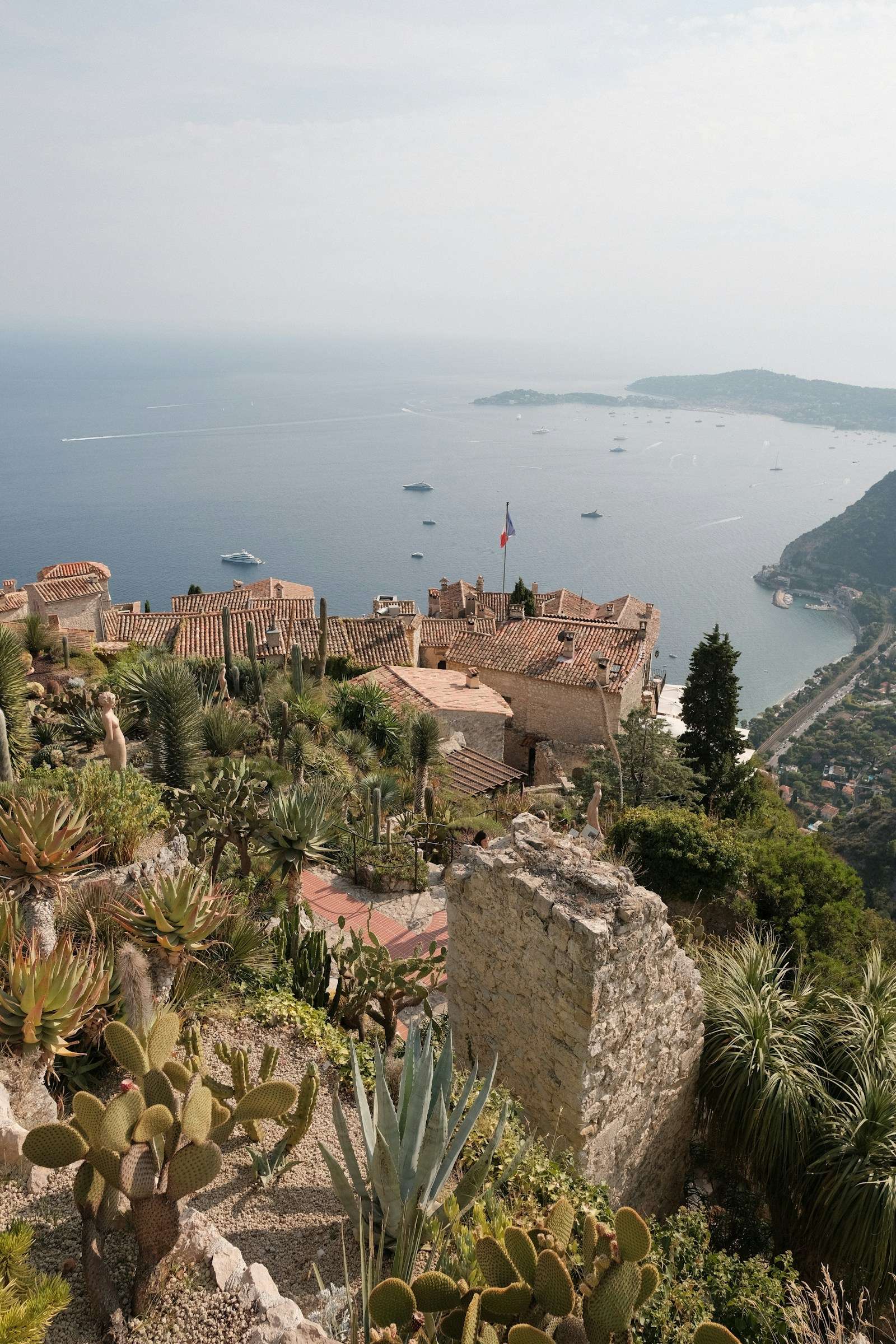
The short version
- Buses climb from Nice to Èze Village in about half an hour on the Moyenne Corniche — cheap, frequent in season, and the right ascent; regional connections also at sncf-connect.com for the sea-level station.
- The village is a single spiraling lane of stone — galleries, a chapel, and doorways polished by six centuries — that summits at the Jardin Exotique.
- The garden plants cacti and sculpture on the old castle’s crag for a modest fee, and its terraces hold the Riviera’s definitive panorama: Cap Ferrat to the Esterel with the sea a thousand feet down.
- The Fragonard perfume factory at the village edge runs free tours ending, inevitably and cheerfully, in the shop.
- The Chemin de Nietzsche — the mule path where the philosopher walked out part of Zarathustra — drops from the village to Èze-sur-Mer’s station in about 45 steep minutes.
- Èze-sur-Mer at the bottom offers a beach interlude and the train back to Nice in ten minutes — the loop that makes the day’s geometry work.

Getting there
The bus from Nice’s port-side stops rides the Moyenne Corniche straight to the village gate — the approach with the views and without the climb. The train alternative serves Èze-sur-Mer at sea level, leaving the Nietzsche path’s 400 vertical meters as your entry fee; per the alarm, save that path for the way down. In high season the buses run full by mid-morning — another argument for the early start the village demands anyway.
The day
Arrive before ten and take the lane slowly upward: the vaulted passages, the placette by the chapel, the galleries before they’re elbow-to-elbow. The Jardin Exotique’s entry fee buys the summit — give the terraces real time, because this is the view the whole Riviera is auditioning for. Fragonard’s tour and a lane-side lunch (from socca-simple to the château hotels’ starred terraces, priced accordingly) round out the village. Then the descent: the Nietzsche path’s stony switchbacks with the sea filling the frame, knees engaged, water in hand. At the bottom, a swim or a pastis at Èze-sur-Mer, and the ten-minute train home along the water. The loop is the whole design — up by road, down by philosophy.
When to go
April to June and September to October give the path its footing and the lane its breathing room. July and August work strictly on the before-eleven plan — cruise and coach traffic makes midday Èze a single-file event, and the exposed path bakes after noon. Winter keeps the village open, quiet, and occasionally cloud-wrapped, with the garden’s cacti indifferent and the panorama, on clear days, at its sharpest. The path after rain is slick enough to demote to the bus; the alarm’s shoe clause is not decoration.
Frequently Asked Questions
Is Èze overrated?
It’s tiny, commercial, and breathtaking — all three at once. The before-eleven rule and the garden’s summit decide which experience you get; timed right, it’s the Riviera’s best short climb.
How hard is the Nietzsche path?
About 45 minutes down on rough, stepped, sometimes loose ground — real shoes, moderate knees, no exposure drama. Upward it’s a legitimate hour’s workout, which is why the loop runs the direction it does.
Is the garden fee worth it?
The €8-ish buys the only 360 in town and the crag the village exists for. Skipping it in Èze is visiting the theater and not the stage.
Can I combine Èze with Monaco?
The same corniche continues — bus or train links make Èze-morning, Monaco-afternoon a classic double. It costs you the slow lunch; the geography approves either choice.
Village or sea-level Èze?
The village is the sight; Èze-sur-Mer is a pleasant beach stop and the path’s endpoint. Base the visit up top and let the bottom be the reward, not the destination.