An Afternoon in Cannes
Thirty minutes down the line, Cannes performs its Croisette — but the islands offshore are the point: the fortress cell that held the Man in the Iron Mask, and a working monastery whose monks make wine.
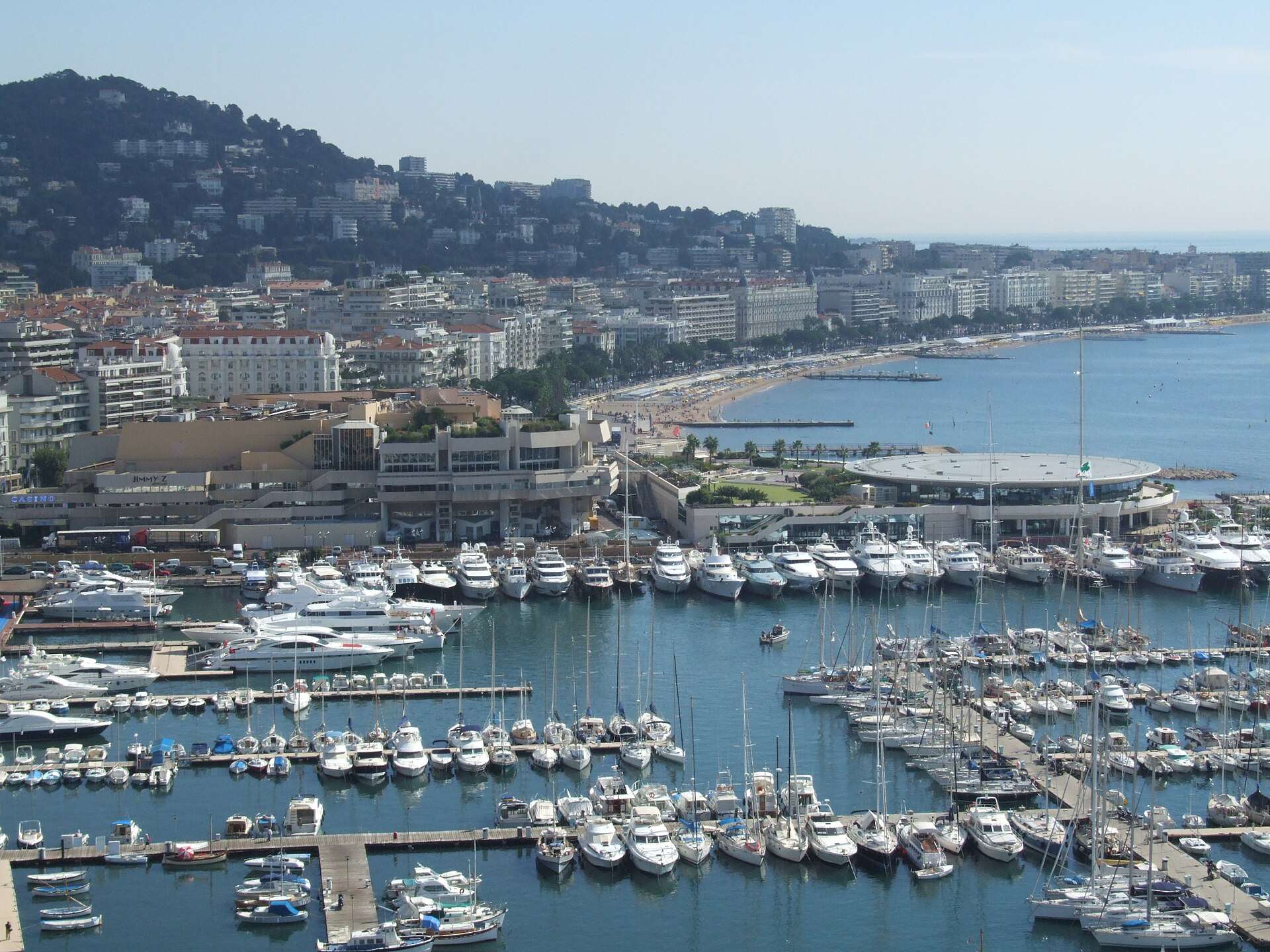
The short version
- TER trains run Nice to Cannes in 30–40 minutes at regional fares and high frequency (sncf-connect.com), landing ten minutes’ walk from the Croisette and the old port’s island ferries.
- The festival truth per the alarm: mid-May’s Festival de Cannes converts the town into a credentialed industry event — screenings badge-only, hotels at multiples, the Croisette a barricaded runway — spectacular to brush past for a day, hopeless as a normal visit, and the alarm’s any-other-month rule is the practical verdict.
- The beach truth runs parallel: much of the central Croisette sand operates as paid private beach clubs (the photographed rows of umbrellas), while genuinely public stretches — the Plage du Midi run west of the old port among them — swim free; knowing which is which saves both money and indignation.
- Le Suquet — the old town on its hill — climbs to the Notre-Dame de l’Espérance terrace and the castle museum for the port-and-bay panorama, with the Forville market’s covered halls at its foot running the morning produce-and-socca register.
- The Îles de Lérins are the alarm’s point: Sainte-Marguerite’s Fort Royal holds the cell where the Man in the Iron Mask was imprisoned for eleven years — the mystery prisoner of Louis XIV’s reign, his identity argued for three centuries — plus eucalyptus trails and clear-water coves; ferries run from the old port’s quay.
- Saint-Honorat, the smaller island, is the quieter marvel: a working Cistercian monastery in a lineage running back sixteen centuries, whose monks tend eight hectares of vines — their wines and liqueurs sold at the abbey shop — with the fortified old monastery on the shore and a no-picnic-zone dignity the island maintains.

Getting there
The train’s frequency makes Cannes a whim from Nice; the islands add the one booking-adjacent decision — the ferry quay serves both islands on separate lines, and the last-return times per this network’s standing habit get photographed before boarding. The two-island day is possible but rushed; the alarm’s structure picks one island plus the town, with Sainte-Marguerite for history-and-swim and Saint-Honorat for quiet-and-wine as the real fork. Festival-week visitors accept the spectacle premium knowingly or reroute the day to Antibes.
The day
Forville market first while it’s in voice — socca, produce, the old town’s morning economy — then Le Suquet’s climb for the bay panorama and the castle museum’s eclectic hour. The ferry takes the midday: Sainte-Marguerite’s twenty minutes lands you at Fort Royal for the Iron Mask’s cell (the graffiti, the legend’s three-century argument told straight by the museum) and the island’s eucalyptus-and-cove circuit — swim shoes pay at the rocky entries. The Saint-Honorat version trades the fort for the abbey: the fortified monastery tower on its shoreline rocks, the vine rows between chapels, the shop’s wine-and-lérina errand, and a hush the island enforces by nature. Back ashore, the Croisette walk takes its true form per the alarm — public sand where it’s public, window theater where it isn’t — and the evening train home runs against the coast’s last light.
When to go
April–June and September–October run the town and islands at their best — swimming from late spring, ferries at full schedules, terraces without the August crush. May’s festival fortnight is its own animal per the alarm: visit deliberately for the spectacle’s edges or skip the town entirely that window. July–August packs the beaches and boats at Riviera peak; the islands’ morning ferries beat the day-boat crowds. Winter strips Cannes to a pleasant market-and-promenade town with the islands nearly private — the connoisseur’s version, weather permitting the crossing.
Frequently Asked Questions
Who was the Man in the Iron Mask, actually?
Unknown — which is the whole legend. A prisoner held under Louis XIV, his face concealed (in velvet, by the sober accounts), imprisoned eleven years at Sainte-Marguerite before dying at the Bastille in 1703. Candidates from a royal twin to a disgraced valet have been argued for three centuries; Voltaire and Dumas built the myth. The fort presents the cell and the candidates without pretending to settle it.
Can I visit during the festival?
You can enter the town — the festival doesn’t wall Cannes off — but screenings are industry-badge territory, prices spike across everything, and the Croisette functions as a security corridor. Celebrity-spotting from the barricades is the available product. The alarm’s verdict holds: as a normal day trip, any other month wins.
Which island should I choose?
Sainte-Marguerite for the fort, the history, the trails, and the better swimming coves — the fuller general-interest day. Saint-Honorat for monastic quiet, the shoreline tower, and the wine — the connoisseur’s afternoon. Families lean Marguerite; contemplatives and oenophiles lean Honorat. The ferries’ separate lines mean the choice is real.
Is the monks’ wine actually good?
Genuinely — the abbey’s eight hectares produce serious, small-quantity wines (and the Lérina liqueurs) sold at the island shop and select restaurants, priced as the artisanal products they are. Buying at the abbey funds the community that has kept the island for sixteen centuries, which improves the bottle’s story at zero cost to its contents.
Cannes or Antibes from Nice?
Antibes (documented on this network) for the Picasso museum, the old town’s ramparts, and market charm; Cannes for the islands and the name. The honest ranking puts Antibes ahead as a town and Cannes ahead the moment the ferry leaves the quay — the Lérins are the tiebreaker nothing in Antibes answers.